We Assemble to Worship

The Bible has much to say about the local assembly of believers. In fact, the word “church” or “churches” occurs 93 times in the New Testament. The word “church” comes from a Greek word that means “a calling out”, i.e. an “assembly.” In professing Christianity, the importance of gathering together on a regular basis for worship has diminished. To many it has become a routine of drudgery though it ought not to be. Consequently, it would do us well to remind ourselves of the purpose of (as we often call it) “church-going.”

There are several good, scriptural reasons for coming together as believers. The first is to worship God corporately. God is to be glorified (Isaiah 42:8) and he is in the business of seeking worshippers (John 4:23-24). Corporate worship is part of God’s plan for now and will be through eternity to come (Isaiah 66:23). We simply cannot worship corporately without gathering together.

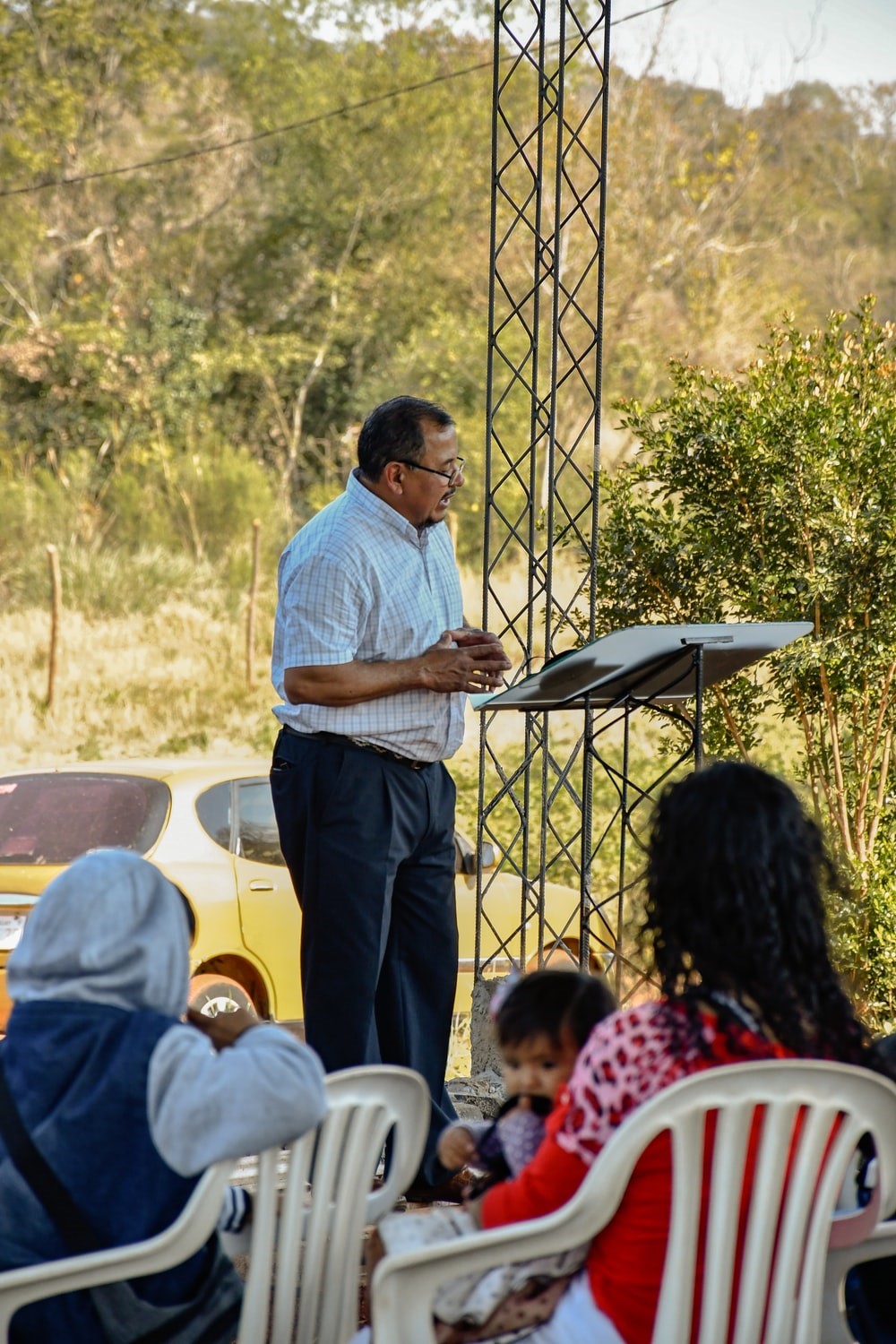
We worship God through the preaching and teaching of his word. We gather to hear godly men minister the word of the Lord to our hearts through faithful preaching and teaching. God speaks to us through his word and we worship him by yielding to and obeying his truth (Isaiah 66:2; Psalm 138:2). We gather together to hear his word that we may be conformed to his image through our obedience. This glorifies God.

We gather together that we may enjoy the fellowship of the saints. Christianity is a communal affair. God saved us by his grace through the gospel of Jesus Christ and, consequently, “set the members every one of them in the body [the church] as it has pleased him” (I Corinthians 12:18). Paul reminds us that “we are members one of another” (Romans 12:5). We gather together to encourage one another in the things of God. The Christian life is not an easy path. It is marked by our own sinful tendencies within and much opposition from without. God made the body to be a place of mutual encouragement.

We gather together to minister of our gifts one to another (I Corinthians 12:7). Every believer has received at least one spiritual gift (Ephesians 4:7) which God intends for us to use in the local assembly for the benefit of building up the body of Christ (Ephesians 4:16). The local church is a place of ministry for each believer.

Finally, when we assemble together we learn the value of corporate prayer. We learn of each other’s needs – physical, material, spiritual – and are exhorted to pray for one another. We pray as a church for the advance of God’s will, the spread of the gospel, and the ushering in of his kingdom. Christ himself taught “my house shall be called the house of prayer” (Matthew 21:13).

Finally, we come together that we might have the joy of giving back to the Lord from that which he has given us. Yes, church is a place where we bring our offering unto God. Giving unto the Lord whether it be praise, thanksgiving, or of our material blessing is an act of worship. This brings us back to that which the Father seeks, i.e. he “seeketh such [true worshippers] to worship him” (John 4:23).
Peace in Our Times!

We live in uncertain times. But if we are honest with ourselves, we must acknowledge that uncertainty has characterized all of our times. What then makes these times seem different even to the point of fostering fear and anxiety? Current events cast an ominous shadow and threaten the stability of our daily lives. World peace is revealed as fragile at best, nothing more than a house of cards. Economic prosperity has grown elusive making it to appear beyond reach altogether. Law and order is no longer predictable making basic societal functions increasingly risky. Historic cultural absolutes are now questioned and fundamental premises denied. Add to all this, wickedness appears unchecked and the lack of civility has permeated society. Is it any wonder that anxiety dominates so many lives today?

There is hope! An event in the history of Judah will illustrate this unfailing option. The nation of Assyria grew to empire status in the 8th century B.C. It overran the Northern Kingdom of Israel and carried the Israelites captive back to Assyria in 722 B.C. Now this evil empire stood on the threshold of doing the same to Judah. In that very threatening time God reminded his people through his prophet, Isaiah, of an unchanging truth. “The LORD is exalted; for he dwelleth on high…and [consequently] wisdom and knowledge shall be the stability of thy times, and strength of salvation” (Isaiah 33:5-6).

God is the source of our comfort and hope. The circumstances of our lives are under his control. The Scriptures tell us that he “works all things after the counsel of his own will” (Ephesians 1:11; emphasis added). This includes the advance and retreat of kings and their kingdoms. To finish the story above, Assyria was precluded from invading Jerusalem; the LORD himself destroyed their army; they returned home and their king was killed by his own two sons.

But it is not sufficient to only know that God is in control. What makes that truth so assuring and comforting is that God is also unfailingly good. God is always good and he only does good. His behavior is not contingent on our goodness, but flows from his very nature. The child of God can say with David, “Surely goodness and mercy shall follow me all the days of my life” (Psalm 23:6). As Paul wrote to the believers in Rome, “And we know that all things work together for good to them that love God, to them who are called according to his purpose” (Romans 8:28). The God who comforted David is the same God who confirmed his word to Paul and is the same God that we love and serve today. Both his purpose and goodness are unchangeable.

There is much to discourage and dishearten the believer today. A casual viewing of the evening news confirms this. But God invites each of us to put our confidence in him that we may know his peace in our times. Those that do so “shall not be afraid of evil tidings: [for] his heart is fixed, trusting in the LORD” (Psalm 112:7). Consequently, “Thou will keep him in perfect peace, whose mind is stayed on thee because he trusteth in thee” (Isaiah 26:3). We can have peace in our times.

A Life That Becomes the Gospel of Christ

While in prison Paul wrote to the church in Philippi, “only let your conversation be as it becometh the gospel of Christ” (Philippians 1:27).  The word “conversation” means far more than mere speech in this context.  At the time our English Bible was translated, this word embraced one’s entire manner of life, i.e. one’s conduct as well as conversation in every relationship and venue of life.  The word “becometh” is very similar to how we might use it today.  We might say something like “That dress becomes you.”  By that we mean that dress flatters you or is attractive on you.  Thinking more exact then about Paul’s instruction to the Philippians, we would say that he wanted their conduct to beautify the gospel of Jesus Christ.

Paul had a very specific purpose in mind when he wrote this to these believers.  He had just confirmed to them that Christ had “begun a good work” in them as a result of their faith in the gospel.  Now he implores them to let this good work have its way in changing their lives unto the glory of God.  What specifically then is his expectation by virtue of this charge?  It is very simple, yet very profound.  The gospel message changes lives in that it delivers from sin.

The gospel of Jesus Christ is a message of deliverance.  It testifies that Christ Jesus came into the world to save sinners – to save them from sin’s penalty (i.e. eternal separation from God in hell); to save them from sin’s power; and, ultimately, to save them from sin’s presence (in heaven).  Paul charged them and expected them to lead lives that were worthy of that gospel, i.e. lives that testified deliverance from the power of sin.  Those who were once liars now spoke only truth.  Those who were lazy now worked to provide for themselves and to be able to share with others.  Those who were selfish became generous.  Those who were sexually lewd and vile became pure in thought and action.  The list goes on.

Biblical Christianity is more than going to church on Sunday or saying a prayer before a meal.  It is necessarily life changing because sin’s power is both real and inescapable otherwise.  The gospel of Christ gives us a new heart – one that desires to please a holy and loving God.  These desires manifest themselves in our conversation and conduct.  This was what Paul expected to see.  Knowing what the gospel meant, he had every right to that expectation.  How about you?  Has your religion made a difference in your life?  If not, let me introduce you to Jesus Christ and his life changing gospel.

A God That Judges

Has there ever been such a time as this when doing wrong came so easy and doing right was resisted so vehemently?  We are tempted to question whether God is watching or whether there even be a God.  Yet times such as ours are not unique. David in his generation made similar observations.  However, he rightly concluded “Verily there is a reward for the righteous: verily he is a God that judgeth in the earth” (Psalm 58:11).  That is, judgement is part of God’s activity.  God is the Judge and He shall judge in time.  He warns us freely that “it is appointed unto men once to die, but after this the judgment” (Hebrews 9:27).  So it is not only certain that God does judge, but it is just as certain that He shall judge.  That being so, there are four truths we can know concerning the very nature of his judgement.   

The first is “we are sure that the judgement of God is according to truth” (Romans 2:2).  God knows the truth.  Men cannot hide or mischaracterize their thoughts and deeds.  He cannot be fooled for “all things are naked and opened unto the eyes of him with whom we have to do” (Hebrews 4:13).  He knows the truth and will judge according to truth.

The second is that God “will render to every man according to his deeds” (Romans 2:6).  It is one thing to know the truth, but it is another to act faithfully in response to it.  This will God do.  He will render, i.e. give appropriately, to every man what his works deserve.  This is a frightening thought when one pauses to consider that, according to God’s own testimony, “there is none righteous, no, not one…there is none that seeketh after God…there is none that doeth good, no, not one” (Romans 3:10-12).

The third is that God judges men according to what they know not by what they do not know.  Paul goes to great length to show that God’s judgement of the Gentiles will be no less righteous because they do not have the law than his judgement of the Jews to whom the law was committed.  He concludes “if the uncircumcision (i.e. Gentiles) keep the righteousness of the law, shall not his uncircumcision be counted for circumcision?” (Romans 2:26).  God, the Judge of all the earth, will judge man by what that man knows, i.e. by the light he has received.

Finally, we understand from Paul, the Apostle, that “God shall judge the secrets of men by Jesus Christ according to my gospel” (Romans 2:16).  The truth that tips the scale is what a man (or woman) has done with the gospel of Jesus Christ.  To believe the gospel (Christ died for our sins, was buried, and rose the third day) and receive Him as Savior is to know the forgiveness of sins and the consequent life and peace.  To reject him is to abandon the mercies of God and to be “punished with everlasting destruction from the presence of the Lord” (2 Thessalonians 1:9).  The question of the ages remains for us today as it did for the Jews standing before Pilate 2,000 years ago – what will you do with Jesus?

It is Impossible for God to Lie!

Police officers deal with many unsavory characters.  No one can disagree with that.  Perhaps, the most pervasive challenge is knowing when they can trust someone.  To put it bluntly, police officers are lied to profusely and this feature of their profession makes it increasingly difficult for them to trust anyone.  Even unwittingly they begin to put their guard up because it has subtly become a way of life.

There is One, however, who can never lie and in whom we can always depend – Jesus Christ.  The apostle John called Jesus the “faithful witness” (Revelation 1:5).  He is the faithful witness because he always tells the truth.  In fact, the author of Hebrews relates that it is “impossible for God to lie” (Hebrews 6:17). 

What a comforting and disarming truth to know that God cannot lie!  Not so with mankind – the Scriptures make every man (and woman) culpable in this matter.  They declare “The wicked are estranged from the womb: they go astray as soon as they be born, speaking lies” (Psalm 58:3).  Experientially, we know this to be true.  We do not have to teach a child how to lie.  It comes naturally to them.  Rather, we train them to speak the truth. 

On the other hand, “God is light, and in him is no darkness at all” (I John 1:5).  Consequently, “every word of God is pure: he is a shield to them that put their trust in him” (Proverbs 30:5).  We can stand upon his word because it is truth and he cannot lie.  Coming full circle to Christ, the faithful witness, we do well to note his exchange with Pilate when he stood before him on the morning of his crucifixion.  Pilate asked Jesus if he was a king and he replied that he was.  But then Christ added this remarkable testimony concerning himself.  He said “To this end was I born, and for this cause came I into the world, that I should bear witness unto the truth” (John 18:37).

To what truth does he refer?  John answers that for us.  “This is the record, that God hath given to us eternal life, and this life is in his Son.  He that hath the Son hath life; and he that hath not the Son of God hath not life.  He that believeth not the record that God gave of his Son hath made him (God) a liar” (I John 5:10-12).  Remember, God cannot lie.  Believe him and all will be well.

The Inevitability of Death

In his teaching on the resurrection to the Corinthian believers, Paul makes two statements that give insight to the origin and universality of death. “For since by man came death, by man came also the resurrection of the dead. For as in Adam all die, even so in Christ shall all be made alive” (I Corinthians 15:21-22; emphasis added).

Death is real. It happens to each and it will happen to all. None are excluded. The Scriptures teach plainly “it is appointed unto men once to die” (Hebrews 9:27). As we saw above, the Apostle Paul reminds us that death came by man. When God created Adam and Eve, he placed them in the Garden of Eden to dress and to keep it. He gave them provision and prohibition. “Of every tree of the garden thou mayest freely eat: but of the tree of the knowledge of good and evil, thou shalt not eat of it: for in the day that thou eatest thereof thou shalt surely die” (Genesis 2:16-17).

We know that Eve ate of that tree, gave of it to her husband and he did eat also. They both disobeyed God’s prohibition – she through deception by the serpent and Adam deliberately. Their sin brought death to them both. Though spiritual death was immediate, physical death was not. Even so, the process of death began in them. Death has prevailed upon every man and woman since that time for “in Adam all die.” And so it is that death came by man.

Paul writes elsewhere “Wherefore, as by one man [Adam] sin entered into the world, and death by sin; and so death passed upon all men, for that all have sinned” (Romans 5:12). Nothing quite testifies to our sin nature and consequent sinfulness like the presence of death. Every funeral, every cemetery testifies to our sin. We have all sinned; therefore, death comes upon all. We are literally born “dead in trespasses and sins” (Ephesians 2:1).

The universality of death is what makes the resurrection of Christ so precious for “in Christ shall all be made alive.” As we were born into sin and its inevitable death by our relationship to Adam, so through the new birth are we made alive by our relationship to Jesus Christ. Christ conquered death for us. It is his blood shed on the cross that satisfies the claims of the law upon us and removes the sting of death. Christ is life (John 14:6) and he gives life to all that come unto him. Jesus states plainly “I am the resurrection, and the life: he that believeth in me, though he were dead, yet shall he live: and whosoever liveth and believeth in me shall never die” (John 11:25-26).

While death is inevitable for each, it cannot hold the Christian. The believer need never fear death for “the gift of God is eternal life through Jesus Christ our Lord” (Romans 6:23). To live beyond the fear of death is to live indeed!

Not Giving Way to a Spirit of Fear

Solomon wrote “Boast not thyself of tomorrow for thou knowest not what a day may bring forth” (Proverbs 27:1, emphasis added).  These words have never been truer than they are today.  The expectation of a “routine” day has been shattered.  Even a simple trip to the grocery store has the promise of anything but certainty.  The specter of the unknown rattles our thinking and we find ourselves scrutinizing events and circumstances that would otherwise belong to the mundane operations of our sub-conscious.  Fear comes into play more than it ever did and we feel defenseless against its sudden rise – or so we think.

That many of us feel this way in these times is not surprising.  But for the child of God, we need not allow those feelings to reign.  Paul reminded timid Timothy that “God hath not given us the spirit of fear, but of power, and of love, and of a sound mind” (2 Timothy 1:7).  The child of God is not immune to fear, but rather overcomes it. 

The word “power” speaks to the enabling that is effective in dismantling the shackles of fear and, thus, allowing the believer to do or say what the situation genuinely requires.  Courage then is not the absence of fear, but rather the boldness to act while staring it in the face.  Furthermore, fear is focused on self and immobilizes the will to act.  God couples with that spirit of power a love that quenches self-interest.  This love governs the use of that power or enabling for good.  Love always does what is good, what is best, what is right for that is the very nature of love.  I am reminded often that I need not like someone, but I must always love them.

Finally, God channels the operation of power and love through the grid of a disciplined or “sound” mind.  Our grip on truth must be held firmly and not dislodged by our emotions so that we may act and not react.  Solomon wrote, “He that is slow to wrath is of great understanding, but he that is hasty of spirit exalteth folly (Proverbs 14:29).

Child of God, the Savior wants to use us as channels of his grace and truth in these trying times.  We must not let fear disengage us from our God-appointed opportunities, whether small or large.  We must play the part and not give way to fear.  May we resolve to follow Him, trust Him, and serve Him.

They Were First Called Christians

Luke records for us, “And the disciples were called Christians first in Antioch” (Acts 11:26).  The word “Christian” simply means “little Christ.”  It is not rocket science to understand the significance of people referring to Jesus’ disciples as Christians – they behaved like him in word and deed.  That is at the heart of what it means to be a disciple.  To follow Christ is to strive to imitate him.

The natural question follows, i.e. how do I follow Christ?  What does that really mean?  Those that know Christ, i.e. those that would be called Christian, are those that obey him.  John instructs us plainly in this matter.  “Hereby we do know that we know him, if we keep his commandments.  He that saith, I know him, and keepeth not his commandments, is a liar, and the truth is not in him” (I John 2:3-4).  This is the acid test of Biblical Christianity – obedience to the word of God.

If you can take or leave the Bible; if it is of no consequence to you; if you don’t actively seek to know it that you might obey it, then John calls that person a liar.  Being a Christian is more than just going to church on Sunday morning because everyone else in your community does so or that’s how you grew up.  That is cultural Christianity – not Biblical Christianity.  It is one thing to conform to one’s culture.  It is a completely different matter to be conformed to the word of God.

Paul made the choice between cultural and Biblical conformity plain in his admonition to believers in Rome.  “I beseech you therefore, brethren, by the mercies of God, that ye…be not conformed to this world: but be ye transformed by the renewing of your mind, that ye may prove what is that good, and acceptable, and perfect, will of God” (Romans 12:1-2).  To follow Christ then is to resist being conformed to this world – its affections, its thinking, and its pursuits.  Rather, we are to be made like unto Christ by the word of God changing our thinking and, consequently, our behavior!

Friend, these two paths are headed in completely different directions and directly opposed to each other.  One path is the path of life and the other is the path of death.  Which path are you following?

God is For Me!

We read in the Scriptures that Jesus Christ “is the propitiation for our sins and not for ours only, but for the sins of the whole world” (I John 2:2).  Propitiation is a theological term that describes God’s response to the sacrifice of his Son on our behalf.  It is the only word among those that describe our salvation that is actually directed toward God.  The believer is forgiven, reconciled, justified, sanctified, glorified, but it is God and God alone that is propitiated. 

Propitiation answers the just wrath of an all holy God against the sin of his creation.  Our sin, both yours and mine, demands death and eternal separation from this holy Creator.  Yet, in the eternal plan of God the Father, Christ the Son suffered that death in the sinner’s place and his blood has been offered up in full payment for that sin.  God has looked upon that blood and declared it sufficient.  That is, every claim that a righteous law could make against a violating sinner has been satisfied – payment in full.  And God is propitiated!

Because God is propitiated, he is free to forgive the repentant sinner on the merits of Christ’s sacrifice.  It is here at the cross where the righteousness of the law and the mercy of God meet.  With the sin question settled, God is now for me and as Paul wrote to the believers at Rome, “If God be for us, who can be against us” (Romans 8:31)?  What an awesome thought, i.e. God is for me!  I am no longer his enemy because of my sin and the object of his just wrath.  Rather, God is for me! Truly, who then can be against me? 

To be forgiven is the greatest evidence of commitment that can be known.  Consequently, those who have been forgiven know this promise, “I will never leave you nor forsake you” (Hebrews 13:5).  There are many enemies and circumstances that will oppose the child of God in this world not to mention our own failures that beset us.  But God is for us and he will not abandon his child.  Believe it; live in its light; do not doubt it no matter the darkness.  As one old preacher wisely said, “God and you make a majority!”

Perhaps, you’re reading this and do not know the blessing of sins forgiven.  As the Scriptures have declared and I have shared here, Christ is the “propitiation …for the sins of the whole world.”  That propitiation includes your sins.  Believe in Christ and know that your sin debt has been satisfied. 

Former Things

I would think that most Christians, i.e. true believers in the Lord Jesus Christ, are familiar with the promise of God found at the end of the book of Revelation. “And God shall wipe away all tears from their eyes; and there shall be no more death, neither sorrow, nor crying, neither shall there be any more pain: for the former things are passed away” (Revelation 21:4). It is the absence of these “former things” that distinguishes the new heaven and new earth from our present one. As John points out, they are passed away – gone forever!

Our lives in this present world are inescapably touched by such things – things that hurt, that separate, that disappoint, that cause sorrow, crying, pain. We cannot outrun these things. They are as much a part of our lives as sunshine and rain, summer and winter, night and day. In many cases we have no control over them. Yet in many cases we ourselves are the cause of them.

But, oh, the promise that is ours! There shall be no more death – the ultimate separation. We shall never again stand over the silent grave of a loved one. Separation and the fear of death that would seek to rise in our own hearts shall be crushed forever. There are no cemeteries in the new earth!

There is nothing there that causes anguish of soul, that gives sorrow to the heart, that robs us of our speech and leaves nothing in its place but sobbing and bowing of the head. There is no relationship there marred by estrangement and its consequent grief. Sin and its effects are forever banished.

There is no disappointment there, for every expectation is found and met in Jesus Christ who is altogether lovely. And tears, the offspring of these “former things” are wiped away eternally by the omnipotent hand of God himself.

Yes, these things now will be former things then. But for now, these things are our lot. They batter us, bruise us, crush us, scar us. But someday, for those that know Christ, they will be former things. Friend, is that your hope? Sin has had its way with this world and those that dwell therein. But Christ came to take away our sins and give us a living hope. He gives peace in the midst of these things and is preparing a place where peace shall reign for the Prince of Peace himself is there. Do you know him?